Law of Assumption Topic Guide
The Law of Assumption dictates that whatever judgments, beliefs, or assumptions you make and hold to be true will make impressions upon the subconscious mind. According to Joseph Alai, the world and your own actions will then automatically move and form together to manifest reflections of these inner assumptions until you change them.
What Joseph teaches
In the framework of Joseph Alai, manifestation is systematically demystified through the study of patterns, data collection, and direct experiential testing over thirteen years. Rather than relying on generic psychological self-help advice, Joseph focuses on the metaphysical cornerstone of reality: the Law of Assumption as taught by Neville Goddard. When you make conclusions about how the world works based on past experiences, memories, or tragedies, those conclusions become active blueprints that dictate your external circumstances.
Most people experience repeating patterns of frustration, broken relationships, or financial difficulty because they fail to realize that superficial affirmations or temporary mental monologues account for only a tiny fraction of reality creation. True and lasting manifestation requires examining the dormant and active assumptions operating within your subconscious mind. By understanding how these assumptions drive a bridge of incidences, you can consciously rewrite your internal blueprints to produce consistent, permanent results.
Core principles
Subconscious Impressment via Judgment
Whatever you judge or assume to be true makes a direct impression upon the subconscious mind. Whether you assume that money comes to you easily or that people are consistently mean to you, your judgments act as instructions. Once an assumption is impressed, a bridge of incidences automatically emerges from the subconscious to manifest reflections of that assumption in your physical world indefinitely until you change it.
Assumptions as the Cornerstone of Reality
Assumptions and beliefs serve as the foundational framework of your entire lived experience. They encompass your conclusions, judgments, and views on how the world works. Growing up through childhood and encountering various life events, you form frameworks that continue to execute automatically. These invisible assumptions dictate whether you experience abundance, stability, or recurring hardships.
The Compulsion to Prove Beliefs True
Once an assumption is established in your mind, you do not merely observe reality passively; you are actively moved to make those beliefs true. Furthermore, the entire external world shifts and forms together to prove your beliefs. If you hold a subconscious blueprint that partners always leave, your actions and circumstances will align to validate that exact assumption over and over again.
Distinction from Generic Psychology
Joseph Alai emphasizes that manifestation has its own distinct vernacular and mechanics that differ entirely from standard academic or psychological textbooks. Treating assumptions through the lens of mainstream psychology fails to capture the true causal nature of reality creation. Manifestation is a precise system rooted in consciousness and tested observation, not generalized cognitive reframing.
Packing Beliefs with the Imaginal End
Achieving permanent and consistent results requires more than just imagining a desirable end state, such as being rich or being with a specific person. You must also pack your internal beliefs and assumptions into your imaginal acts. By combining the desired outcome with transformed underlying beliefs—such as assuming consistency, loyalty, and peace—you eliminate fear and prevent your manifestations from vanishing.
Common misunderstandings
Affirmations alone constitute the entire mechanism of the Law of Assumption.
Affirmations and inner dialogues represent only a tiny percentage of reality creation. Merely repeating phrases without addressing the deeper, active subconscious assumptions and past-based blueprints will not yield lasting results.
Manifestation assumptions are identical to psychological beliefs taught in standard self-help books.
Manifestation has its own unique causal vernacular. Joseph Alai distinguishes true manifestation mechanics from generic psychological approaches, noting that psychological coping mechanisms do not automatically alter the metaphysical bridge of incidences.
Circumstances change randomly without any connection to your internal framework.
External circumstances and repeating patterns are direct reflections of your subconscious assumptions. The world and your own behavior move precisely to make your active blueprints true.
How to apply it
Analyzing Past Patterns and Beliefs
- Examine recurring negative patterns in your finances, relationships, or daily life.
- Trace these patterns back to identify the underlying assumptions or painful beliefs causing them.
- Recognize how past events or memories formed these conclusions so you can consciously dismantle them.
Summarizing the Opposite of Painful Beliefs
- Identify the specific anxiety or insecure assumption that arises when you pursue a desire.
- Draft the exact opposite scenario that reflects what it would be like if you no longer had that problem.
- Formulate positive structural rules, such as assuming absolute consistency and loyalty in every relationship.
Packing Beliefs into Imaginal Acts
- Visualize your desired end goal, such as being married or financially secure.
- Simultaneously embed your new foundational assumptions regarding stability, safety, and permanence into the scene.
- Hold this combined imaginal act consistently to generate permanent, real-world results.
Questions people ask
What is the Law of Assumption according to Joseph Alai?
The Law of Assumption is the principle that the judgments and assumptions you make impress upon your subconscious mind. Your subconscious then generates a bridge of incidences that causes both you and the external world to manifest reflections of those assumptions until you consciously change them.
Why do most people fail when trying to manifest using affirmations?
Most people fail because affirmations and superficial inner dialogues account for only a tiny percentage of reality creation. If your core subconscious assumptions and past-based blueprints remain unaddressed, repeating phrases will not override the deeper programming causing your repeating life patterns.
How do past events influence our current assumptions?
We continuously make judgments based on childhood experiences, tragedies, and interactions throughout our lives. These memories form an internal framework of beliefs that operate automatically as our default reality, continuously moving us and the world to prove them true.
What does it mean to pack beliefs into an imaginal act?
Packing beliefs means combining your vision of the desired end result—such as wealth or a specific relationship—with transformed underlying assumptions about how that reality operates. By imagining not just the goal, but also the elimination of fear, inconsistency, and doubt, you secure permanent results.
How is Joseph Alai's teaching different from generic psychology?
Joseph Alai emphasizes that manifestation has its own precise vernacular and causal mechanics that are completely separate from mainstream psychological self-help. His teachings rely on systemized data collection, pattern recognition, and firsthand testing of metaphysical laws rather than academic psychology.
Can assumptions remain dormant until triggered?
Yes, many assumptions lay dormant inside the subconscious mind until specific circumstances occur. For example, an underlying assumption regarding insecurity or abandonment may only activate and cause anxiety once you enter into a serious romantic relationship.
Ask the Advisor
Joseph Alai source videos
 2024-08-30
SELF-CONCEPT & Law of Assumption: FULL Manifesting MASTERCLASS
Discover the power of automatic manifesting and the law of assumption in this in-depth workshop. I delve into the intricacies of manifesting, shedding
 2024-06-22
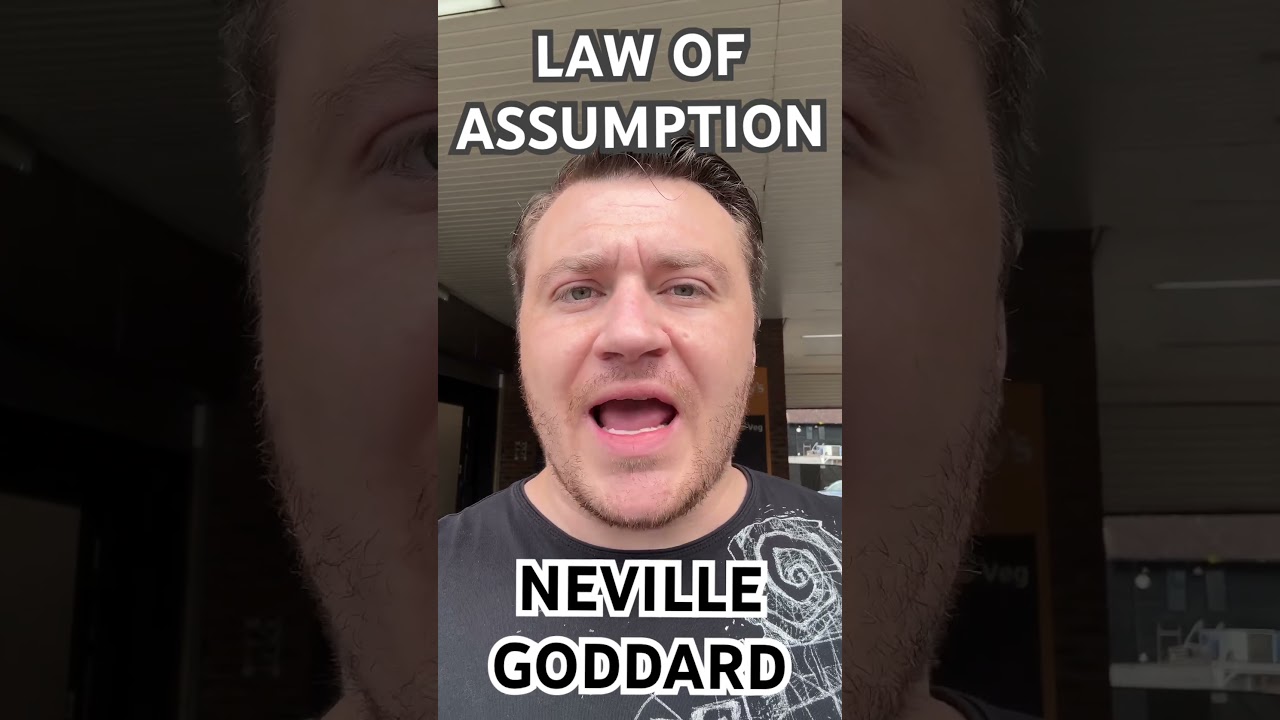
Law of Assumption true meaning: Neville Goddard #manifestanything #selfhelp #manifestingtechniques
hey this is Joseph Alai here I want to give you a quick explanation of what the law of assumption is in the terminology of Neville Godard as it relate
 2024-11-19
Anti-METHOD for New Beliefs & Assumptions (It's Not Affirmations) | Manifesting Mini-Series
Workbook: https://www.josephalai.com/assumptions-and-beliefs-manifesting-worksheet WORKSHEET REVOLUTIONARY Advanced NEVILLE GODDARD AI: ONLY Available
 2019-07-27
Manifesting: The Overlooked Art of Assumptions
🚀 EXCLUSIVE MANIFESTING COMMUNITY on DISCORD: https://patreon.com/manifesting_mastery Chat with ME, Join LIVE Q&A's, MasterMind Groups & more with an
 2024-06-24
The Secret to POWERFUL Results: Assumptions & Desire #manifestingmethods #manifestingreality
👁️ Apply for Personalized Coaching: One-on-one coaching sessions with me. Unlock your manifestation potential. Let's tailor a path that resonates wit
 2024-06-19
Assumptions Are Based on PAST Events (Memories) #manifestingmethods #manifestingreality #newage
Download the FREE Step-by-Step Manifestation Scene Outlining Worksheet to be guided exactly how to manifest exactly what you want! https://vip.josepha